How the Tax Code Helps Create More Billionaires
And getting rich the old fashioned way.

According to the Swiss bank UBS, the number of billionaires worldwide jumped 9% last year from 2, 682 in 2024 to 2, 919 today. Of these new billionaires, 91 joined this rarefied group through inheritances, six of them being the grandchildren of the late Singapore tycoon Goh Cheng Liang.
According to Visual Capitalist, the greatest number of billionaires live in New York City with 109, followed by Hong Kong (74), Moscow (73), Mumbai (69) and Beijing (63). The other U.S. cities in the top 20 around the world are San Francisco (50), Los Angeles (35) and Dallas (24).
Visual Capitalist also tracked the states with the highest growth in the number of billionaires over the last 10 years, which could occur either from their growth in wealth or their moving from one state to another. The states picking up the most billionaires were California (75), Florida (73), New York (43) and Texas (35). Florida may be a case of billionaires moving from other states with its number of plutocrats growing an astonishing 166% over the last decade from 44 to 117.
Billionaires are the tip of iceberg of the megawealthy whose numbers have been growing with increased inequality. Not only does this concentration of wealth leave most Americans and citizens of other countries out in the cold, it gives the increasingly wealthy undue political power. In response, some politicians and public policy experts have been looking at ways to better tax the wealthy. As reported by The Guardian, several countries are considering imposing a minimum 2% annual tax on the wealth of billionaires and other super-rich citizens whose wealth is just below the billionaire mark.
How the U.S. Tax Code Supports the Wealthy
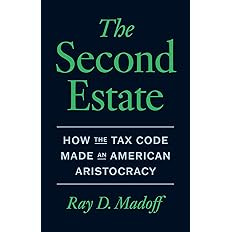
In her new book, The Second Estate: How the Tax Code Made an American Aristocracy, Boston College law professor Ray D. Madoff (who is also a friend of mine from law school) describes how the tax code helps the super-rich get richer at the same time it erodes the ability of everyone else to accumulate savings.
In short, the rich pay little or nothing in taxes because they have little “income” as defined by the Internal Revenue Code. Working stiffs, whether food delivery workers, plumbers, or doctors, pay both income taxes and payroll taxes. A married couple earning $100,000 (according to my calculations) will pay combined taxes of approximately $16,000, plus any state income taxes (not to mention the fact that they’ll also pay sales taxes on a good portion of their income since they’ll need to use it all to pay living expenses). If they’re self-employed they’ll pay another $7,000 or so as the employer’s share of the FICA tax. A single person earning $100,000 will pay more, approximately $21,000, because they’ll be in a higher tax bracket and have a smaller standard deduction.
High-earning doctors, lawyers and other professionals pay a much higher tax rate, though their FICA contributions are capped at $184,500 of annual income. A couple with both spouses earning $500,000 would pay approximately $300,000 to the federal government.
Their next door neighbor who inherited their wealth or made it through investing would pay almost nothing. Professor Madoff describes the many ways they escape taxation, including:
Wealth is not taxed, unlike income. So, as the stock market and other investments grow in value, there’s no tax.
Low capital gains tax rates. While income tax rates are graduated up to 37%, capital gains are taxed at either 15% or 20% depending on one’s tax bracket.
But few people pay taxes on capital gains. The growth in the value of assets is only taxed when it’s sold, so if you don’t sell your assets you don’t pay any tax at all.
Borrowing against assets. But you may well ask is how are these rich people going to buy their yachts and homes in the Hamptons if they don’t sell their investments. The answer is that they borrow the necessary cash to fund their lifestyle with the loans secured by their investments. As long as they make the annual payments on the loans, they don’t need to sell anything and don’t need to pay any tax.
The step-up in basis. Then, due to the step-up in basis that occurs upon the death of the owner of an appreciated assets, they can pass the property to their heirs who can then sell it and pay off the loan with no tax on the gain.
Erosion of estate taxes. But don’t they pay estate taxes on the inherited property? Not if they’ve done their planning. Professor Madoff describes how as a result of the campaign against the “death” tax the threshold for estate taxation was increased from $600,000 in 1997 to $15 million today and the top marginal rate reduced from 55% to 40%. It was as high as 70% in 1981!
Cat and mouse. Further, Professor Madoff tells us that in recent years Congress has abdicated its role of closing tax loopholes. Congress and creative tax professionals used to play a cat-and-mouse game of the latter devising new ways to game the system and Congress shutting them down. But since 2000, Congress has been inactive while the wealthy and their advisors have continued their creative destruction. As a result of all these changes, according to Wikipedia, the number federal estate tax returns dropped from 139,000 in 1976, representing 7.65% of deaths that year, to 2,129 in 2019 on just 0.08% of estates of people who passed away.
The charitable deduction. The growth of donor advised funds and private foundations permits the wealthy to stash money away and take a charitable deduction against any taxable income they may have without the money actually going to charity. They and their heirs can then control the distribution of these funds and enjoy the benefits and recognition given to donors and in some cases use them to support their political goals.
One way that all of this contributes to growing inequality is that while most Americans have trouble building wealth due to taxes and other headwinds, those who already have wealth experience it growing at compound rates without being subject to the erosion of taxation.
Solution?
There have been a number of proposals to get the wealthy to once again pay their fair share and to limit their growing and undue political influence (not to mention the number of private jets spewing carbon gases), including a wealth tax, elimination of the step-up in basis and getting rid of the ridiculous “carried interest” tax loophole that permits those in the private equity business to pay taxes at capital gains rates instead of personal income rates.
Instead, Professor Madoff proposes redefining “income” for tax purposes and taxing capital gain at death. Instead of only taxing earned income, interest and dividends, she proposes that “income” for tax purposes include gifts and inheritances. As she says:
Given the preeminence and centrality of the income tax system, it seems odd to not have it apply to the sources of income most common for the richest Americans: inheritances and investments.
Gifts and inheritances could be brought into the income tax system simply by repealing a provision of the tax code that excludes them. Then we would have something more akin to an inheritance tax than an estate tax, since the recipient would be taxed rather than the estate. Those who are low income or receive little by way of inheritance would pay a small tax and those who are higher income or receive a larger inheritance or gift would pay at a higher rate. We could still exclude small gifts of up to $15,000 that are not subject today to gift tax reporting.
Taxing capital gain when a transfer is made by gift or upon death is what happens in Canada. There’s no reason we couldn’t adopt the same rule. If, in addition, we eliminated the lower tax rate on capital gain — after all, why should those who make money by investing pay at a lower rate than those who work for their daily bread — would also more fair.
One of the benefits of Professor Madoff’s proposals is that they would be relatively easy to implement and would in fact simplify our overly complex tax system.
The step-up in basis plus the borrow-die-repeat strategy is one of those loopholes that sounds absurd when explained out loud but remains shockingly intact. What blows my mind is how the carried interest loophole survives despite being universally recognized as indefensible, even by some private equity folks themselves. The proposal to tax inheri tances as income rather than having a separate estate tax system makes way more sense from an administrative standpont, and it sidesteps the whole "death tax" framing that killed previous reform efforts.